The Product angle is hosted by Pradip Khakhar (Product Manager and Founder of The Product Angle). Pradip works with individuals and product teams to develop soft skills such as influencing without authority, trust, and how to negotiate with cross-functional teams.
Highlights:
02:05 – Who is Leo and what he does. 10:30 – How can Gym’s market effectively in today’s environment. 13:30 – How marketers build trust. 16.30 – Marketing tips for founders and marketing professionals starting out in their careers. 22:00 – Advice Leo would give to marketers starting out.
Marketing leader and pioneer, Jason Falls, shares his story on being a keynote speaker, becoming an author, and tells how he managed both. All while working a full-time position in agencies as well as e-commerce.
Jason is the author of No Bullshit Social Media: The All-Business, No-Hype Guide to Social Media Marketing and the co-author of The Rebel’s Guide to Email Marketing: Grow Your List, Break the Rules, and Win, and currently works as Director of Digital and Social Strategy at Cornett.
In this episode, Jason also dives deep into the importance of influence in marketing as well as business overall, including more information on his upcoming book focused on influencer marketing and set to come out in late 2020.
Needless to say, the Fyre Festival was a huge disaster. On the worst side of things, it cost innocent people significant sums of money and put them in dangerous situations. From a business perspective, this event brought a lot of attention to influencer marketing—even my mom now knows what influencer marketing is—but in a way that has negatively affected many people’s perception of influencer marketing. What’s important here is The Fyre Festival Does Not Represent Influencer Marketing. Heck, it wasn’t even a success from a basic marketing perspective.
What was the Fyre Festival?
The Fyre Festival was a music festival that intended to promote the Fyre booking app. Created and promoted by Billy McFarland (Fyre Media, CEO) and Ja Rule (yes, this Ja Rule), the Fyre Festival meant to be a “luxury” event with tickets and experiences costing $50,000 or more.
Looked exciting and well-planned, right? The problem is that the entire event ran like a scam. The event lacked enough food, the living situations were dangerous, people were trapped at the airport and on location, and more. One popular picture sums up the sad experience:
What does influencer marketing have to do with all of this?
Two documentaries were made: one on Hulu titled Fyre Fraud and one on Netflix titled Fyre: The Greatest Party That Never Happened. Both of these released four days apart in January of 2019 and are worth watching because they provide two different points of view and varying material. Influencer marketing is one of the topics that both documentaries focused on and exposed this hidden marketing strategy to the general public.
What is influencer marketing?
Influencer marketing is where popular or influential people or companies on social media, such as makeup artists, gamers, and musicians, promote something to the general public. Influencer marketing works, and it works really well for many reasons.
Organic reach on social media is declining
People don’t trust brands
Use of ad blocker is up
The key success of influencer marketing is that it’s more human than other types of marketing; people buy from people they trust. Influencer marketing was the primary success factor behind the Fyre Festival ticket sales. In fact, over 400 influencers promoted the festival.
Is this instance a typical representation of influencer marketing?
The Fyre Festival does represent how a tool can be used for bad. It does not represent what influencer marketing is really about and all the amazing work that marketers and communicators are doing to promote great products and impactful messages. Stated another way, the Fyre Festival does not represent a good influencer marketing campaign.
It’s also important to note that from a business perspective, Billy and his team lacked the success they hoped to have. They aimed to sell about 40,000 tickets but only sold about 8,000. That said, their strategy still convinced people to go from not knowing what the festival was at all, to being willing to spend upwards of $12,000 on an event ticket. Afterwards, people tried blaming the marketers and the influencers. While it is the responsibility of an influencer to invest in learning about the products they promote in order to protect their followers and themselves, one opinion piece posted on The Drum stated:
“…the influencers and marketers were responsible only for getting people to buy tickets. The fault lies with the event organizers on the ground, who were evidently more inept than Ashlee Simpson was at singing.”
What’s important to understand about influencer marketing?
People are far more willing to trust a popular person than a random, faceless ad. So when done correctly, there is no stronger form of advertisement than someone utilizing an influencer and their fanbase.
While there are always a few bad apples, the best, most worthwhile influencers make their money by being authentic, so it would make sense to believe that even if they are being paid, that they are also being honest with their fans.
“Influencer marketing is more than just posting a picture with a product on Instagram. Influencer marketing is powered by not only word of mouth communication, but creating authentic and transparent relationships with your community over time. By building these relationships over time, you are able to gain trust amongst your community, which is more valuable than any monetary incentive you can achieve. In order for influencer marketing to work, it has to be a true win-win situation for the brand, as well as the influencer. Authenticity is lacking in most posts, but those partnerships that are really “real” will be the ones that will be successful.”
Here are a few tips to keep your brand safe and your influencer marketing campaign focused on ROI:
Use all influencer types, including macro and especially micro influencers.
Make sure your influencers are compliant with FTC guidelines. You want this from a legal and ethical perspective.
Vet your influencer’s content, fraud level, and audience. Remember, just because your influencer lives in country X, it doesn’t mean their audience is from X.
Ensure your agreement with influencers includes the ability to use their content throughout your other marketing channels.
Work with influencers to put paid media behind content that’s doing well.
Tools matter for sourcing, messaging, managing incentives, reporting, and so on. Not using a tool for influencer marketing is as if not using something such asHootsuite to manage your social media channels.
Here’s a presentation from a social media week speech that shares an overview of the Fyre Festival and success tips for influencer marketing and social media marketing professionals:
In the end, influencer marketing can have huge benefits when utilized correctly. Saying we need to get rid of influencer marketing because of the Fyre Festival is no different than saying the internet is the reason why bad things happen. Just as the internet has many great uses, so does influencer marketing when done ethically and carefully.
Like technology, brand personality has changed over the years. A brand’s personality represents who they are and how they interact with customers. Social media has helped this concept grow from a professional to a personal realm, giving brands the ability to seem “human” and develop stronger consumer-brand relationships.
Marketing and branding are huge aspects in reaching consumers and developing loyalty. Organizations base all actions on their branding (purpose, positioning, personality/voice, visuals etc.), and use various mediums to reach their audience. As technology advances and new communication methods emerge, they change how consumers engage with companies and open the door for organizations to alter their own methods. With the largest audience, social media is growing as THE place for brands to reach consumers.
Social media is built on two-way communication and personality. Each platform has its own personality and methods of interaction, giving organizations the opportunity to showcase various versions of their voice. This can allow organizations to reach multiple market segments, including consumers who might not be part of their specified target audience. Brands can capitalize on this by developing real, humanized personalities.
The New Authenticity
Traditionally, brands have always wanted to be authentic in their values and actions, and personality has mostly been shown in a professional voice. But social media has turned this professional setting into a casual one, creating new personality/voice standards. Consumers want to digitally interact with brands that they can relate to—a consumer will become more interested in a brand that is friendly and responsive than they would with a brand that is strictly professional. This concept introduces the new ideals of authenticity: not only do consumers want brands to be true to their values but want them to be organic in their voice.
In their 2017 Q2 social media report, Sprout Social identified the top seven voice styles for brands including: honest, friendly, helpful, funny, trendy, politically correct and snarky. Brands that are honest, friendly and helpful are considerably the most authentic, because they exhibit the most desirable, human-like traits. Think about it: you’d rather be friends with someone who’s nice and conversational rather than someone who is rude or serious all of the time. The new age of consumer being friends with brands means: digital communication doesn’t only need to be interactive but needs to be humanized and friendly.
Using Platforms to Your Advantage
Facebook, Twitter and Instagram have various features and tones for their audiences. Even if the same consumer is on all three platforms, they have personal preferences for how they communicate on each. Here’s the breakdown:
• Facebook—more indirect and informational, typically use the platform to share interests (especially with new algorithms, Facebook is more personal in terms of engaging with friends and family rather than companies)
• Twitter—very interactive (expect responses), communicative, no real limit on Tweets, live Tweeting, snarky in tone (think Wendy’s)
These generalities can always differ depending on who you’re talking to, so when digitizing your voice always do your research first.
Overall: Express yo’self
Technology and social media are constantly changing how consumers expect brands to engage and communicate. Two-way communication and the causal setting encourage consumers to be more interactive and less professional with organizations; consumer-brand relationships have grown from just a sales experience to a friendship. Keep this idea in-mind when digitizing your brand voice, express yourself as someone you’d want to befriend…you rather engage with someone who is nice and honest rather than someone who is rude and distant, right? Take this concept and decide who your brand is—personality wise.
With your basic personality/voice, you can expand your expression depending on your social media platform. For Facebook, make your brand’s personality a little more helpful and informative. For Twitter, take your voice and add a little attitude and humor. For Instagram, be the best version of your brand: be aesthetic and concise.
Remember, always look at who you are offline—your branding, your why, your values—when deciding who you want to be online…don’t simply choose a snarky voice because Wendy’s makes it cool. So, no matter how you decide to relate to and reach your consumers, never forget your why; bee expressive and be yourself.
What’s your take? How do you express your brand (personal or professional) on social media?
The Build & Inspire Podcast is an interview-style podcast where I connect with people from all walks of life, doing what they love, in hopes of inspiring others to do the same.
I feel the podcast has been in the making since I was born. I’m a talker first and foremost, always have been and I have had lots of high school detention slips to prove it.
What can I say? I love to talk to and learn about people, and I love to support others whenever I can. Talk radio has always been part of my life and is still is. I start my day with NYC morning talk radio, regardless of where I am in the world (and yes, I sometimes this does cause confusion when it comes to whether or traffic…). I fell in love with podcasting the first time I heard Josh and Chuck from Stuff You Should Know (I never met them, but it feels like we’re best friends). Today, I’m listening to podcasts anytime Ican: as I shower, drive, exercise, and so on.
Producing and launching the podcast has been an incredible experience and I’m humbled by the those willing to take the journey with me both behind the scenes and as guests. I received thousands of listens on the first episodes, without any paid promotion. WOW! THANK YOU, THANK YOU! I would have been happy with ten listens.
Subscribe to the Build & Inspire Podcast:
[podcast_subscribe id=”2886″]
That said, the process has not been without its challenges. I’ve learned a lot and I’m still learning. Below is more on this journey so far in hopes of inspiring you to launch your own podcast – if you were ever thinking about it. One thing to keep in mind is that I wanted to do this as inexpensively as possible without sacrificing quality; I didn’t want to be the person who goes skiing once and buys all the best things to not be good at it or never go.
Podcasting Equipment:
The Build & Inspire Podcast is an interview style podcast and I knew I wanted all interviews to be in-person whenever possible. So I started with the equipment below:
The Movo LV20 setup has two microphones and really long cables. I’ve recorded in some really echoy rooms, and while the echo has come through, it’s many times better than the iPhone mic or the mic on my MacbookPro.
I also ordered the wind muffs to try to block out sound, but I don’t think they do much of anything. I’m going to see about ordering different ones.
I hook everything into the Sony recorder so I don’t have to worry about my phone’s batteries or forgetting to put my phone on silent. The microphone adapter cable I have as a just-in-case. This setup has worked well for me and I will continue to use it as I travel about.
Podcasting Audio Software:
This has been the hardest thing for me. I tried everything, including Audacity, Garageband, and Logic Pro X. After a lot of trial and error, YouTube tutorials, I had a mixed version of the podcast I thought was ready. I did a test launch and it sounded great on my computer and headphones. But after a friend gave it a listen in his car, and it sounded like I recorded it underwater.
Finally, I did what I should have done from the beginning, I outsourced it to Fiverr. I know better…I was going to do this initially but I thought it would be fun to learn audio mixing and production. Bad move. I now have someone I use out of Colombia who will clean up the sound, mix the intro with each new episode file, and I have it ready in MP3 and WAV formats within 24 hours.
Podcasting SaaS Distribution Platform:
This one was easy. I went with Anchor FM. I was familiar with Anchor FM from another podcast project I was a part of, it’s free, and it distributes to most of the major podcast channels (iTunes, Google, Spotify, etc.).
I know there are other ones out there, maybe others that are much better, but it was a no-brainer for me because it was free and I knew how to use it.
My Only Complaints:
The Web Embedded Player: It takes a few seconds to load the widget, after the other parts of the page have loaded, and it makes me think it’s not working.
Website Link: When Anchor FM shares the podcast details with iTunes, Google, and so on, it shares the podcast website as their profile page on Anchor FM (see below). I wish it would linkback to BuildAndInspire.com.
What’s Next?
There are lots of people I can’t wait to interview, but I won’t be able to get together with them in person, so I’ve built a makeshift studio with a Blue Yeti Nano and acoustic foam. I’m using Zoom to record the audio, and it’s been working out fantastically well:
I hope you learn from my challenges and if you were thinking of starting your own podcast, I hope you go ahead and do it. It’s been an amazing time learning and connecting with wonderful people, and I’m sure it will be for you too.
Please share any thoughts, recommendations, or anything else in the comments.
The Real Time Summit wasn’t just a marketing conference; it was an experience.
An experience of collaboration, inspiration, people, and it’s kicking off a passionate and supportive community that will live on.
Location: Chattanooga, TN
A major reason for The Real Time Summit’s success was its location. Chattanooga is a fantastic place to have an event. It’s a charming city with character and warmth that makes it easy to connect outside of the event. Wherein a bigger city, it’s so easy to disappear.
Chattanooga, TN
Chattanooga, TN
I met about ten people for the first time (ever) the night before the event, and in no time, we were side-by-side singing karaoke. Locals were asking if we were lifelong friends – and it wasn’t because of the way we harmonized, trust me. (I, of course, wanted to sing some Meat Loaf. Paradise by The Dashboard Light Anyone? No?)
Sing It or Wing It – Chattanooga, TN
Sing It or Wing It – Chattanooga, TN
Speakers: Not Just about Business
The event wasn’t all business, it also focused on the human connection. Many speakers showed the power of social media has to make an impact on human lives. I left feeling inspired and even cried twice during two separate talks. We heard about helping less-fortunate children around the world and supporting a town after a natural disaster.
Whoever thought a marketing event could make anyone cry tears of joy?
Jeremy Cowart at the Real Time Summit
Joshua Chavers at the Real Time Summit
Of course there was a who’s-who of business leaders educating and inspiring. Leaders in sports (Tina (Miller) Lloyd), news (Joshua Chavers), entertainment (Alissa Gwynn), technology (Nick Cicero), and many other areas of business. They too felt and projected a sense of genuine passion and excitement. Enough where I felt as if I was on stage with everyone – not just a audience member.
On a personal note, I had the honor of closing out the show as a keynote speaker, and it was a privilege to share the stage with that many fantastic people. For those that know me personally, you know I joke that “I sold cookies for a living.” I thought to myself, “how can I share a stage with someone who is helping bring families together across the world?!” I can only hope that my experience and thoughts could help those people the same way it supports businesses.
Leo Morejon (Keynote Speaker) at the Real Time Summit
Drove as many people to and from the airport as they could
Hired people they knew and respected to work the event
Was an ever-present, supportive team that found time for you if you needed it
Didn’t disappear after the event
Cared for everyone as a human, not as business
I now have a large number of people I call friends, I know it’s the same for others, and lots of amazing stories and work will come out of these friendships.
Social Lion also plans on extending their community online, and the 2019 event is already being planned.
For more on how this community is growing, follow the Real Time Summit on Facebook, and remember, if you focus on people above all else, your marketing conference will be more than just another event.
Hi Mireille! I’m passionate about people – meeting new ones, building relationships, and sharing great experiences together. I also love technology and feel lucky to be living in a time where tech is helping people connect and grow like never before.
How did you get started with Social Media?
By accident, really. I started making websites, and one day a friend asked me to do some marketing for his local music cafe. I began promoting the cafe and events on MySpace (it was the biggest platform at the time), and things took off. That’s how I first realized the power of social media to make an impact on business, and that it was going to affect other industries more and more. So I pursued an internship in NYC at a small digital advertising agency and then began working for JWT’s Emerging Media department, for clients such as Stride Gum and Unilever. After JWT, I went on to work at 360i, where I worked on Oreo, Simply Orange and many other international brands.
What do you love most about social media?
It’s human. Social media is a representation of what we’ve always done as humans – connect and share ideas. Now that’s all just happening online.
What is your favourite platform?
Personally, it’s still Facebook. I don’t live near my family and I travel a lot, so I love that almost all my family is on Facebook, and I get to stay in touch with them there.
Tell us about your social media world record?
This was one of the most exciting and unforgettable times in my life… I could talk about it for days. But in short, we decided that Oreo should go for a Guinness World Record in social media. This would be the first ever social media Guinness World Record record for a brand. We prepped, planned, and the fateful day came.
We published the post asking everyone to join Oreo in reaching “Most ‘likes’ on a Facebook post in 24 hours:”
Soon after, Lil Wayne decided to go for the record, too. This was 100% unplanned. We ended up with the record, but lost it to Lil Wayne shortly after that. (I have a copy hanging on my wall.)
I get asked a lot if I am upset about Lil Wayne’s involvement, but honestly it wouldn’t have been as big or cool without him!
You were involved in the famous Oreo blackout tweet. Tell us about it and what it achieved?
Another favorite memory! The tweet was the culmination of countless amazing people working countless hours to build the brand – both present in the room and not. It also helped that everyone in the room knew and loved the brand so much. After working on Oreo, almost daily for three years, I still know the brand ridiculously well. For instance, if someone says or types “Oreos,” a little alert still goes off in my head that it should be “Oreo cookies.” Of course I never say anything. Overall, it really helped solidify social media as an essential business tool, and the importance of investing in social media programs.
How do you suggest social media marketers get heard above the noise?
Paid media?! OK, besides that…make sure your content is adding value to the consumer. Value can be added in many different ways: making people smile, helping them do their job better, and so on. If you add value, you provide a reason for people to stay with you for the long term, and not just for one post.
What is some advice you would give to someone getting started in social media?
You have to be willing to put in your time. At my internship and first job, I spent tons of hours manually moderating pages, pulling numbers for reports, and doing other laborious tasks. It wasn’t glamorous, but it was necessary work and work that gave me a foundation and appreciation for how everything works.
What are some of your predictions in social media for 2018?
For consumers, interactions are going to get more personal. All the top companies are focusing heavily on their instant messaging features, and this allows us to have better, more in-depth connections with brands and our friends and family. For social media marketers, keep an eye out for automation and AI-powered tools. They’re only getting more advanced, and they will support your work, reach, and give you back some time back during the day.
The terms Blockchain and Bitcoin are still new concepts to many and a bit of a mystery to most, even for those in the space. The idea of an ICO, or Initial Coin Offering (see: What is An Initial Coin Offering? Raising Millions In Seconds), is a newer addition to the growing glossary of terms that need to be learned.
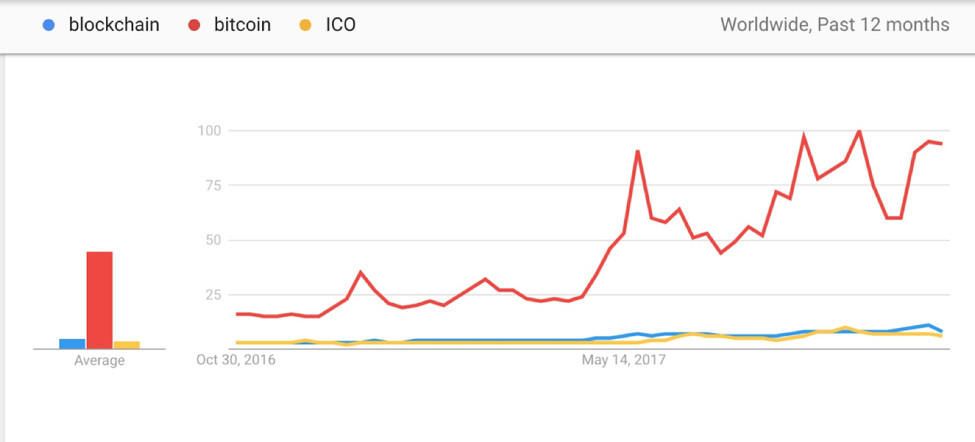
Despite everything, it is great to see that nothing is stopping the excitement building around the space:
It is interesting that the number of searches for the term “ICO” is about the same as the number of searches for “blockchain.” This is excellent for companies participating in ICOs, and arguably quite important for the space as a whole, because it creates an entryway for non-technology, non-finance people to understand our fascinating world.
Therefore, it is crucial that companies get their ICO marketing correct.
If you are part of an ICO, here are the areas to focus on that will help you succeed and help the space as a whole:
Focus on The “Why” (vs. The “How”) Most people have been trained to focus on how something works and, though this is important and needs to be understood, it is not the most important aspect by any means. You need to start with “Why” because it triggers emotional involvement and will therefore inspire the greatest number of people to take action. Emotions can play a large part in decision-making processes, both in business and in life. According to Mary C. Lamia’s Ph.D. thesis, Like it Or Not, Emotions Will Drive the Decisions You Make Today: “A great deal of your decisions are informed by your emotional responses because that is what emotions are designed to do: to appraise and summarize an experience and inform your actions.”
It is easy to see (feel) the impact of starting with “Why” when you see it in action. If a company defines and explains itself with the state of the art technology they use and the smarter way they are using it, many people will be interested enough to click, though not all and sometimes not leading to the best outcome. If the same company starts with “Why” they exist (for example, “We exist to liberate people across the world from economic oppression.”), that will drive a deeper, more meaningful interest in the company. It will drive more clicks, ignite a desire to learn more, and spur interest in sharing the content with others.
This strategy also provides a differentiator allowing you to grow in any direction. If your focus is on liberating people, it will be natural to do anything that furthers that goal. Instead, the “how” boxes you into a corner – by focusing on the technology that liberates people, not the goal of liberating them, it may look (and feel) strange to people when you perhaps decide to grow in a non-technology direction. But by focusing on “why,” even the most adventurous route will feel right; for example, it would not seem strange to anyone (including your employees and customers) if the company decides to open an educational center focused on liberating people.
I encourage you to dive deeper into this concept, and Simon Sinek’s book Start With Why does a fantastic job of explaining it in depth. This idea can support you in other areas of your business as well as your personal life.
Focus on a General Audience (not only a Tech Audience) ICO marketing that caters exclusively to a technology audience will dramatically limit your growth and impact on the world. Is it not true that any limit on your potential growth is bad for business and the general growth of blockchain technology? If you could multiply the number of people that see your message and take part in your ICO, would you not do so?
A proven tactic for ensuring that your marketing as a whole is digestible for a general audience is to keep someone in mind who you know is not technical. Use this person as a filter for creating the copy, collateral materials, and anything else you need to promote your ICO. I use my mother (hi mom) as the filter most of the time. I always think to myself, “If my mother can’t understand this, then it needs to be better.” Of course, the final product does not always hit the mark for many reasons, but I sure try my hardest to get it there, and it has not failed me once.
Another tactic is to not automatically assume that everyone will understand every part of your technology or company. It is a good idea to start from the basics whenever possible. It is conceivable (and would be fantastic!) that someone may land on your page who does not understand anything about blockchain. This person may have stumbled on your company based on your ideas alone. If they are welcomed by content that is full of acronyms or concepts not well known to a more general audience (blockchain still being one of them), then you have created an environment primed for someone to click out of. Do you want to miss this opportunity for a possible investment and further promotion? Because you assumed someone would understand everything? No.
Ultimately, there are many things you need to get right when promoting your ICO (website, paid social media, etc.), so please do not exclusively focus on the above. But start with what I have said as a guiding principle for everything you do, and you will surely come out further ahead. The less mysterious we can make things, and the easier things are to understand, the faster blockchain technology will grow. That goal is what we should all be responsible for working on.
Which companies do you think are doing a good job? Which companies are not doing things so well? We need to know about the latter so we can support them